Why does my doctor want me to scan my face every morning?
Your doctor may ask for a daily face scan to monitor your recovery remotely. Learn about the science behind camera-based vital signs and why it's a key part of modern healthcare.
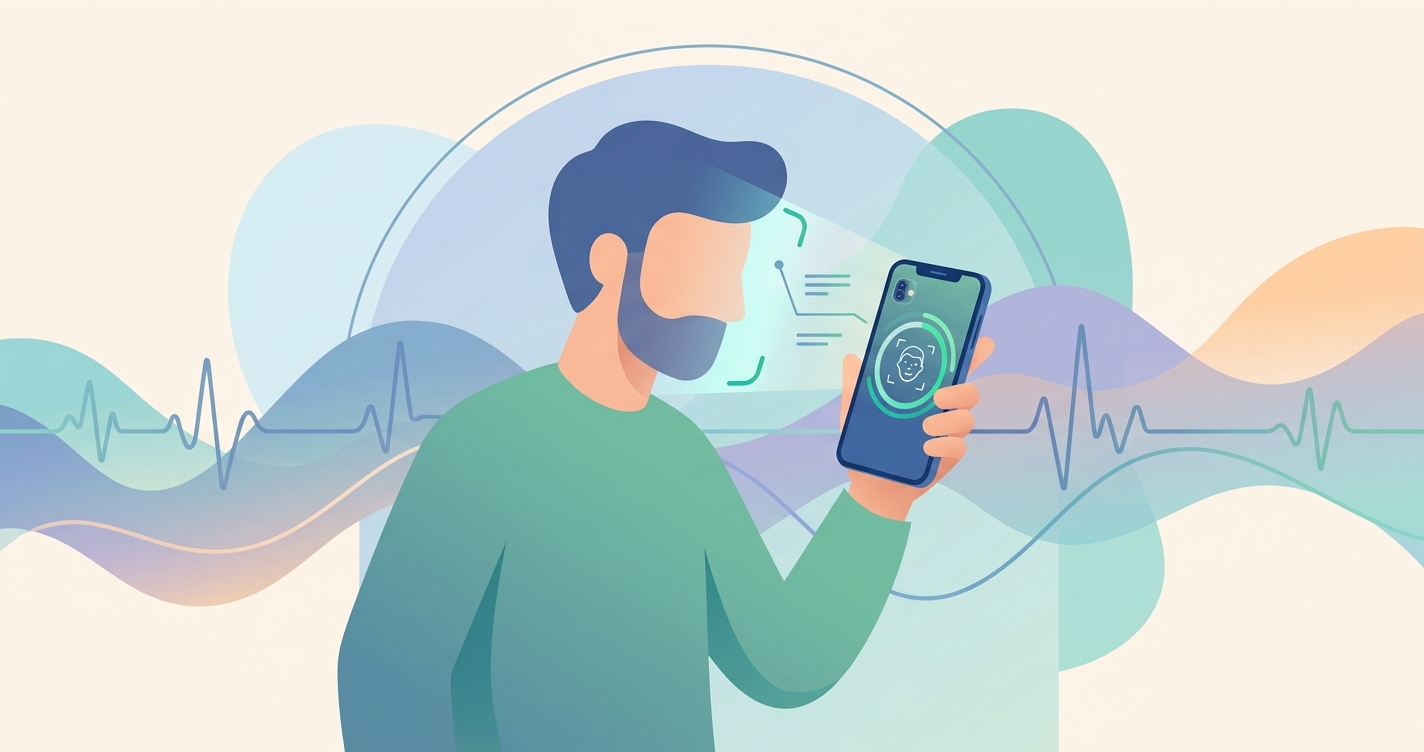
If your doctor has asked you to scan your face with a smartphone camera every morning, you are part of a major shift in how hospitals manage patient recovery. This new approach to post-discharge care aims to keep a closer watch on your health from the comfort of your home, without requiring you to use cumbersome medical devices. The core idea is to catch potential complications early by tracking subtle changes in your vital signs. This practice is becoming a key part of modern recovery plans, and understanding the "why" behind your doctor's request for a doctor daily face scan recovery program can provide peace of mind and highlight the benefits of this recent technology.
"Remote patient monitoring has been shown to reduce hospital readmissions by as much as 38%, according to a 2019 analysis by researchers at the University of Pittsburgh Medical Center."
Why your doctor wants a daily face scan for recovery
The simple act of looking into your phone's camera for 30-60 seconds can provide your clinical team with a wealth of information about your physiological state. This technology, known as remote photoplethysmography (rPPG), analyzes the light that reflects off your skin to detect tiny, invisible changes in blood volume. It is a non-contact version of the same science used in the red-light pulse oximeters they clip on your finger in the hospital. As your heart beats, it pumps blood through the vessels in your face, causing microscopic shifts in skin color. The camera captures these shifts from the video feed of your face and, using sophisticated algorithms, translates them into vital signs like heart rate, heart rate variability (HRV), respiratory rate, and blood oxygen saturation.
For a patient recently discharged from the hospital, consistent monitoring is crucial for a safe recovery. A doctor daily face scan recovery plan allows your care team to track these key indicators day after day, establishing a personal baseline. They are not just looking at a single reading in isolation; they are looking for trends over several days. A gradual increase in resting heart rate, a drop in heart rate variability, or a decrease in oxygen saturation could be an early warning sign of a developing issue, such as a post-operative infection, a fluid imbalance, or a cardiovascular complication. By catching these trends early, often before you even feel symptoms, your doctor can intervene with medication adjustments, a telehealth visit, or other guidance. This proactive approach is central to modern remote care, with the goal of preventing a serious setback that would otherwise lead to a stressful and costly hospital readmission.
Camera-based scans vs. traditional home monitoring
| Feature | Camera-Based Face Scan | Traditional RPM Devices (Cuffs, Oximeters) | | :--- | :--- | :--- | | How it Works | Analyzes video of a patient's face to measure vital signs using rPPG technology. | Requires patients to apply and use separate physical devices for each measurement. | | Patient Experience | Simple, 30-60 second scan using a smartphone or tablet they already own. | Can be complex, with multiple devices to manage, charge, and use correctly. | | Adherence | Higher patient compliance due to ease of use and no physical device friction. | Often suffers from low adherence; patients forget or fail to use devices consistently. | | Data Capture | Captures multiple vital signs (e.g., heart rate, HRV, respiratory rate) in a single reading. | Single-purpose devices; requires separate actions for each vital sign. | | Logistics | No hardware to ship, manage, or retrieve. Software-only solution. | Involves shipping kits, device setup, troubleshooting, and reverse logistics for returns. |
Here are some of the direct benefits for patients:
- Convenience: You can take your readings anywhere, anytime, using a device you already have.
- Comfort: There are no wires, cuffs, or finger clips involved in the process.
- Simplicity: The process is as easy as taking a selfie, which removes the stress of using complex medical gadgets.
- Peace of Mind: Knowing your care team is monitoring your progress can reduce anxiety during your recovery.
Industry applications of contactless vitals
The use of facial scanning for vital signs is not just a concept; it is being implemented across various healthcare settings to improve patient outcomes and operational efficiency.
Post-Operative Recovery
After surgery, patients are vulnerable to complications. A daily face scan allows surgeons and nurses to monitor a patient's cardiovascular and respiratory stability without requiring an in-person visit. This is particularly valuable for patients recovering from cardiac surgery or major abdominal procedures.
Chronic disease management
For individuals with chronic conditions like hypertension, heart failure, or COPD, daily monitoring is essential. A doctor daily face scan recovery protocol helps physicians track response to medication and lifestyle changes, enabling them to personalize care plans and prevent acute events. This continuous insight helps manage long-term health more effectively.
Hospital-at-Home Programs
A growing number of health systems are offering "hospital-at-home" services, which provide hospital-level care in a patient's residence. Contactless monitoring is a cornerstone of these programs, as it allows clinicians to keep a close watch on acutely ill patients remotely, ensuring their safety and timely intervention if their condition changes.
Current research and evidence
The technology powering these face scans, remote photoplethysmography (rPPG), has been the subject of extensive academic research. It is a validated scientific method for measuring vital signs by detecting changes in light reflected from the skin. For example, Giuseppe D'Alterio and his colleagues published a 2024 review of hybrid neural network models that can estimate vital signs from facial videos, showing the rapid advancement in the field. The core principle dates back decades, but its application using standard smartphone cameras is a more recent innovation driven by advances in artificial intelligence.
Researchers have been refining its accuracy and exploring its applications for years. A key 2022 study published in Frontiers in Cardiovascular Medicine by a team at University of California, San Francisco, demonstrated that smartphone-based rPPG could measure heart rate with accuracy comparable to conventional pulse oximeters. Further research has focused on expanding the number of vital signs that can be measured and improving robustness. A team from the University of South Australia published work in 2023 exploring the use of deep learning models to improve the accuracy of blood pressure estimation from facial video, a traditionally difficult parameter to measure without a cuff.
Pioneering researchers like W. T. B. Al-Naji and Javaan S. Chahl have been instrumental in this field, publishing numerous papers on the signal processing techniques required to extract reliable data, even in challenging conditions like low light or with patient movement (Chahl, J. S., 2020). Their work shows how advanced algorithms can isolate the subtle blood flow signal from the "noise" of motion and changing light. A 2023 study in npj Digital Medicine highlighted the robustness of newer algorithms in diverse patient populations, addressing early concerns about performance across different skin tones. This growing body of peer-reviewed evidence is what gives doctors the confidence to integrate this technology into their care plans for a doctor daily face scan recovery program.
The future of contactless monitoring
The future of using a doctor daily face scan recovery program is bright. As smartphone cameras become more powerful and AI algorithms more sophisticated, the accuracy and reliability of contactless monitoring will only increase. We are moving toward a reality where your phone can become a powerful medical diagnostic tool, continuously and passively monitoring your health without you even having to think about it. Researchers are working on extracting even more complex biomarkers from facial video, such as hemoglobin levels and early signs of jaundice. In the coming years, this technology may be integrated into virtual nursing platforms and telehealth systems, creating a seamless link between patients at home and their clinical teams. The goal is to create a healthcare system that is more proactive, predictive, and personalized, catching illness before it becomes a crisis.
Frequently asked questions
Q: Is scanning my face as accurate as the devices in the hospital? A: While hospital-grade equipment is the gold standard, modern camera-based technology has achieved high accuracy for tracking vital sign trends. Research has shown its reliability is comparable to standard home-use devices like pulse oximeters for measuring heart rate and oxygen saturation. The primary goal is to monitor trends over time, which these scans do effectively.
Q: What if I have poor lighting or move during the scan? A: The applications are designed to guide you through the process, often asking you to be in a well-lit area and remain still for the 30-60 second duration. Advanced algorithms can correct for minor movements and lighting variations. If a reading is not successful, the app will simply ask you to try again.
Q: Is my video and health data secure? A: Yes. These medical applications are built to be compliant with privacy regulations like HIPAA. The video is analyzed on-device or on a secure server, the measurements are encrypted, and only authorized members of your care team can access your health data. The video of your face is typically not stored.
The shift toward camera-based remote monitoring marks a significant step forward in patient care. It replaces logistical complexity with a simple, patient-centric experience that drives engagement and provides clinicians with the data they need to support your recovery. As a leader in this space, Circadify is working with health systems to launch and scale these next-generation virtual care programs. To learn more about our RPM pilot program, visit circadify.com/solutions/remote-patient-monitoring.